Patient preferences regarding information on effects and side effects: “...the patient might have died before he manages to read to the end of the package insert”
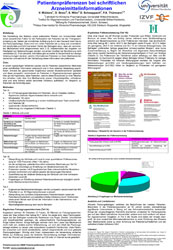
In the study “patient preferences”, it is examined which information about medications patients desire and how, in their opinion, this information should be presented. In six groups of 5-7 persons each, patients with diabetes mellitus, high blood pressure and high cholesterol values are asked about their opinions and feelings in dealing with the package insert. The most important addressed themes are subsequently checked in various implementations in a street survey of 1000 persons in terms of their importance. To this aim, sample package inserts are produced, which differ in a small number of points (e.g. black and white vs. coloured, indication of all side effects or only the frequent ones). These are presented in pairs to the test persons. The test person chooses the preferred alternative in each case. From the results of the street survey, supplementary medication brochures are produced, which are distributed to patients in addition to the package insert. In a third step, these brochures are examined in GP practices in terms of their effect on patients. The aim is to adapt written medication information to the needs of the patients, thus increasing their knowledge about their medications and improving the therapy.
Verena Mülders1, Oliver R. Herber2,3, Stefan Wilm2, David Schwappach4, Petra A. Thürmann1,5
1 Lehrstuhl für Klinische Pharmakologie,
2 Institut für Allgemeinmedizin und Familienmedizin und
3 Institut für Pflegewissenschaft der Universität Witten/Herdecke,
4 Stiftung für Patientensicherheit, Zürich,
5 Philipp Klee-Institut für Klinische Pharmakologie, Helios Klinikum Wuppertal
Background:
The presentation of the benefits and potential risks of medicines constitutes an essential factor for the participation of patients in a therapeutic decision. Besides the verbal information provided by the GP, this purpose is also served by the package insert. This is seen by many patients as too long and incomprehensible and in a quarter of those surveyed, leads to a prescribed medication not being taken. To date, there have been few investigations in Germany about which information patients desire regarding their medications and what type of presentation of this information they prefer.
Aims:
In a two-step procedure, essential features of written information for patients are examined and quantified according to their relative importance. Using the results gained, sample brochures are created and tested in a prospective randomised procedure in patients in GP practices. The hypothesis in this regard is that patients who receive these brochures on their medication know more about their medications (main dependent variable), are more satisfied, and show a higher self-reported adherence compared to patients in the control group.
Methods:
In 6 focus groups with patients from GP practices, who suffer from diabetes mellitus, hypertension and/or hypercholesterolemia, first of all, their wishes with regard to written medication information were assessed. The attributes gleaned from the interviews (e.g. side effects) as well as their levels (e.g. all vs. the most frequent side effects), were checked in a second step in a quantitative preference measurement in 1000 persons aged over 50 years in a street survey in order to analyse the relative importance of individual attributes and their characterisations. The features of patient information recognised as important or patient-friendly were used as the basis to produce ten supplementary package inserts. These will be evaluated in a prospective randomised manner in approx. 420 patients in approx. 30 GP practices. The primary dependent variable patient knowledge will be checked one month after receipt of the information in the intervention and control group. A sustainability measurement will take place after three and six months.
Results and current status:
The focus group interviews showed that package inserts trigger emotional reactions such as fear, doubt, uncertainty and dissatisfaction among those interviewed, which result in various reactions. While some of those interviewed no longer take the medication after reading the package insert, others seek support in order to have the content explained to them, while others still consult additional specialist books. Many patients wish for easily readable, optically appealing and brief package inserts. Particularly important to them is the use of simple words for explanations and highlighting in colour of important information, such as severe side effects. The wish for additional information on a CD or on the Internet was also expressed. In the preference measurement in 1000 persons, those surveyed preferred colour brochures, a short summary as well as general health tips to support the therapy. The preferences of the participants were dependent on age and level of education; no significant differences were found for gender. Older participants showed a preference for less information in comparison to younger participants. Participants with a high level of education desired more information as well as guidelines for action in the case of side effects. For the RCT, a total of 462 patients from 26 GP practices were recruited. Currently, a telephone survey of the patients regarding patient knowledge, satisfaction and adherence is being conducted using standardised questionnaires. The survey is expected to be concluded in June 2011.
Publications from the project “Patient preferences”
Written publications
- Schwappach DLB, Mülders V, Simic D, Wilm S, Thürmann PA: Is less more? Patients’ preferences for drug information leaflets. Pharmacoepidemiol Drug Saf 2011; 20: 987-995.
Conference/congress contributions
- Mülders V, Herber O, Wilm S, Schwappach D, Thürmann PA: Patientenpräferenzen bei Informationen zu Wirkungen und Nebenwirkungen von Arzneimitteln.
Vortrag beim 3rd German Pharmacovigilance Day, Berlin, 2008 - Herber OR, Mülders V, Wilm S, Thürmann PA: „…es könnte sein, dass der Patient, bevor er den Packzettel zu Ende gelesen hat, verstorben ist“ – Zur Weiterentwicklung von Packungsbeilagen aus Patientensicht. Z f A 2009 (Abstract Supplement): 108 (Abstr. WS 221)
- Wilm S, Simic D, Patientenpräferenzen bei Informationen über Wirkungen und Nebenwirkungen von Arzneimitteln, 9. Jahrestagung "Consumer Health Care". Thema: Patientenorientierte Kommunikation - Erwartungen, Nutzen und Risiken", Charité Universitätsmedizin Berlin und dem Verein Consumer Health Care e.V., Berlin, 2009
- Mülders V, Herber OR, Wilm S, Schwappach D, Thürmann PA: Patients`preferences for written information about effects and undesirable side effects of drugs. Br J Clin Pharmacol 2009; 68 (Suppl): 46 (Abstr. 86) 11. Jahreskongress für Klinische Pharmakologie, Heidelberg, 22.-24.10.2009
- Thürmann PA: Patientenpräferenzen bei der Packungsbeilage
BfArM im Dialog Bonn;14.04.2010 - Simic D, Mülders V. Was Sie schon immer über Beipackzettel wissen wollten – Studie ermittelt Patientenwünsche. Die Ersatzkasse. 2010; 90: 112-113
- Thürmann PA, Mülders V, Simic D, Herber O, Schwappach D, Wilm S: Focused conference group: P04 – Pharmacoepidemiology, current controversies and opportunities patients preferences for written information about effects and undesirable side effects of drugs. Basic Clin Pharmacol Toxicol 2010; 107 (Suppl. 1) Paper No. 2894
- Mülders V, Simic D, Wilm S, Schwappach D, Thürmann PA. Patients‘ preferences for written information about effects and undesirable side effects of drugs, Tagungsband DPhG Jahrestagung 2010, Personalisierte Therapeutika – Traum oder Wirklichkeit, Braunschweig, 04.-07.10.2010, 2010; ISBN: 978‐3‐927115‐66‐8, P222, 141
- Simic D, Mülders V, Herber O, Wilm S, Schwappach D, Thürmann PA. Was Patienten wissen wollen – eine Neugestaltung der Packungsbeilage aus Patientensicht. Zeitschrift für Allgemeinmedizin, 2010, 86 (Suppl.), 60
- Simic D, Mülders V, Schwappach D, Thürmann P, Wilm S. Patientenpräferenzen bei der Darstellung von Informationen zu Wirkungen und Nebenwirkungen von Arzneimitteln: Haben patientengerechte Broschüren einen Nutzen? 45. Kongress für Allgemeinmedizin und Familienmedizin, Salzburg, Österreich, 2011, 38 (Suppl.), 39
- Mülders V, Simic D, Wilm S, Schwappach D, Thürmann PA: Was Patienten wissen wollen – Patientenpräferenzen bei schriftlichen Informationen über Arzneimittel.
Krankenhauspharmazie 32: 47 (Abstr); 2011
2. Kongress für Arzneimittelinformation, Köln 2011 - Wilm S, Simic D, Mülders V, Schwappach D, Thürmann PA. Zeigen patientengerechte Broschüren mit Darstellung von Informationen zu Wirkungen und Nebenwirkungen von Arzneimitteln im RCT einen Nutzen?
10. Deutscher Kongress für Versorgungsforschung. 18. GAA-Jahrestagung. Köln, 20.-22.10.2011. Düsseldorf: German Medical Science GMS Publishing House; 2011. Doc11dkvf250. DOI: 10.3205/11dkvf250, URN: urn:nbn:de:0183-11dkvf2502 - · Mülders V, Schwappach D, Simic D, Wilm S, Thürmann PA. Was Patienten wissen wollen – Patientenpräferenzen bei schriftlichen Arzneimittelinformationen. Internationaler Kongress für Patientensicherheit – avanti! Fortschritte!?... im 2. Jahrzehnt des 3. Jahrhunderts, Basel, Schweiz, 29./30.11.2011, 2011, 94 (Suppl.), 63
Scientific award
- Mülders V, Simic D, Wilm S, Schwappach D, Thürmann PA. 1. Posterpreis: Patientenpräferenzen bei schriftlichen Arzneimittelinformationen. 2. Kongress für Arzneimittelinformation. Der Apotheker als Wissensmanager – mehr Sicherheit für Arzt und Patient. Bundesverbandes Deutscher Krankenhausapotheker (ADKA), Köln, 2011
< PaBeKo - Farin | Development, psychometric testing ... - Andreas >